





Biodiversity


Biodiversity
Osotspa Public Company Limited recognizes the importance of natural ecosystems and the urgent need to conserve biodiversity. We are committed to protecting natural ecosystems by preventing deforestation and avoiding activities that may cause adverse impacts on biodiversity and ecosystems.
In addition, the Company is committed to protecting protected areas and areas of significant biodiversity, including UNESCO World Heritage Sites, wetlands designated under the Ramsar Convention, IUCN Category I–IV Protected Areas, and protected areas designated under applicable local laws.

Osotspa's Commitment to Biodiversity
Biodiversity is not considered a significant impact across Osotspa Group’s core business activities, given the nature and scale of its operations. Nevertheless, Osotspa recognizes that certain operational sites and supply chain activities may have potential interactions with biodiversity and natural ecosystems. The Company therefore conducts biodiversity-related risk assessments to identify potential dependencies, impacts, risks, and opportunities and implements appropriate measures to manage and mitigate identified risks.
- Recognize, protect, maintain, enhance, and conserve globally and nationally significant biodiversity and critical natural ecosystems.
- Apply the Mitigation Hierarchy throughout our operations:
- Avoid – Avoid impacts on biodiversity.
- Minimize – Minimize unavoidable impacts on biodiversity.
- Restore – Restore degraded ecosystems.
- Offset – Offset residual biodiversity loss.
- Transform – Transform our operations by adopting appropriate practices to avoid adverse impacts on nature.
- Comply with applicable laws and regulations, adopt relevant voluntary commitments, and align with local and international standards for environmental and biodiversity protection, with a target to achieve No Net Loss of biodiversity and Net Positive Impact (NPI) by 2030.

Osotspa's Commitment to No Deforestation
- Support, protect, maintain, and conserve forest ecosystems.
- Comply with applicable laws and regulations, adopt relevant voluntary commitments, and align with local and international standards related to forest protection and conservation by implementing appropriate control measures and reforestation initiatives to achieve No Gross Deforestation by 2030.
Scope and Approach to Biodiversity Management
The scope and approach to biodiversity management of Osotspa Public Company Limited, its subsidiaries, and its value chain are as follows:
Biodiversity Risk Assessment and Management
The Company is committed to conducting its business in an environmentally responsible manner by incorporating nature, biodiversity, and zero deforestation considerations into its Safety, Occupational Health and Environmental Policy. This commitment extends across the Company's operations and relevant value chain activities to support the reduction of impacts on ecosystems, promote the responsible use of natural resources, and contribute towards its ambition of achieving No Net Loss of biodiversity.
The Company assesses nature- and biodiversity-related dependencies, impacts, risks, and opportunities by referencing the recommendations of the Taskforce on Nature-related Financial Disclosures (TNFD) and applying the TNFD LEAP Framework to better understand the interconnections between business activities, operational sites, supply chains, and natural capital. Supporting tools, including ENCORE and the WWF Biodiversity Risk Filter, are used to analyze biodiversity risks from both geographical and sectoral perspectives. In 2025, the assessment covered 12 operational sites, representing a total area of 54.25 hectares. Key assessment factors included the proximity of operational sites to protected areas, conservation areas, or areas of high biodiversity value; water-related risks; the use of natural resources; raw materials and packaging associated with potential land-use change; as well as waste- and pollution-related risks that could affect ecosystems, surrounding communities, and the environment.
The assessment identified that certain sites are located within or in close proximity to ecologically sensitive and protected areas. In particular, Osotspa Public Company Limited – Ayutthaya Beverage Manufacturing Plant and Siam Glass Ayutthaya Co., Ltd. were identified as having a high level of risk in relation to Protected / Conserved Areas. The assessment results enable the Company to prioritize sites requiring additional management measures and are consistent with its commitment to avoiding impacts on important conservation areas, including UNESCO World Heritage Sites and protected areas classified under IUCN Categories I–IV.
Based on this assessment, the Company identified key nature- and biodiversity-related risks, including water scarcity, water quality, the availability of natural resources, resource use in production processes, and potential impacts arising from waste and pollution. Appropriate prevention and mitigation measures have been established in accordance with the Mitigation Hierarchy, comprising impact avoidance, impact minimization, ecosystem restoration, and, where appropriate, the offsetting of residual impacts.

Integration of Nature-related Issues into Enterprise Risk Management and Corporate Strategy
Osotspa integrates nature- and biodiversity-related risks and opportunities into its Enterprise Risk Management (ERM) processes, strategic planning, and operational planning. The assessment results are used to inform business direction, investment decision-making, impact mitigation measures, management plans for material sites, and responsible sourcing approaches for raw materials and packaging. These efforts enable the Company to manage issues that may have a material impact on its operational performance, financial position, and long-term value creation. The Company also supports its No Net Deforestation ambition by strengthening its resilience to systemic risks and regularly monitoring and reviewing performance to ensure that management measures remain effective, transparent, and subject to continuous improvement. Through this integrated approach, Osotspa aims to support the sustainable growth of the business while creating positive outcomes for nature over the long term.
Building Capacity on Biodiversity and Climate-related Risks
The Company has linked biodiversity-related issues with building awareness and understanding of climate change risks to support the management of systemic risks and strengthen the Company's long-term resilience and adaptive capacity. In 2025, the Company implemented initiatives to enhance biodiversity-related capabilities by promoting the knowledge, understanding, and awareness of employees and stakeholders regarding the importance of ecosystems and natural resource conservation. These efforts were carried out alongside area restoration activities, the efficient use of resources, and the adoption of environmentally friendly technologies. Examples of these initiatives include:
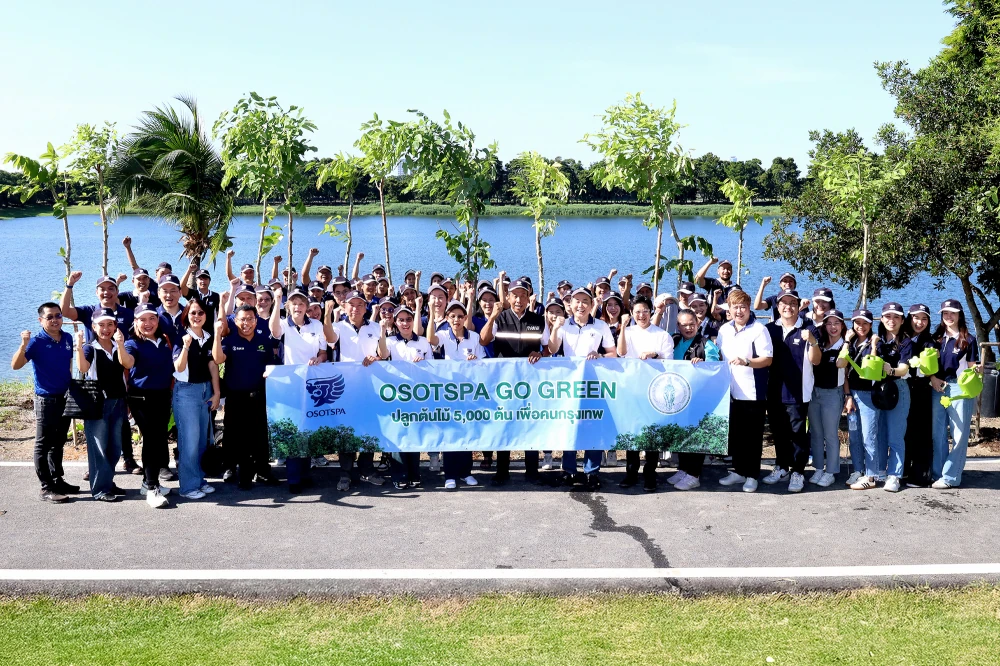
“Osotspa Go Green” Project
The Company has implemented the OSP Go Green Project to support the expansion of urban green spaces, alleviate pressures from air pollution, and enhance the quality of life in urban communities through the continuous planting of trees in public areas across Bangkok since 2022. The initiative reflects the Company's role in contributing to urban ecosystem restoration and aligns with its biodiversity approach, which focuses on reducing environmental impacts, increasing green spaces, and strengthening urban resilience against environmental and climate-related risks.
The project supports the Bangkok Metropolitan Administration's "Plant One Million Trees to Create Green Spaces and Dust-Filtering Walls Across Bangkok" initiative. Under this collaboration, the Company has planted trees in areas with the potential to enhance urban greenery and generate benefits for surrounding communities, as detailed below:
| Year | Project Location | Number of Trees Planted |
|---|---|---|
| 2022 | Vacant areas beneath the Srinakarin – Krungthep Kreetha interchange | 2,500 |
| 2023 | Areas beneath the Yellow Line Skytrain corridor between Lam Sali Junction Station and Klan Tan Station, and adjacent to Piya Phirom Park | 2,500 |
| 2025 | Nong Bon Lake Park and Suan Luang Rama IX Park | 5,000 |
| Total | Total | 10,000 |
Through these efforts, Osotspa contributes to enhancing urban biodiversity, improving environmental quality, and creating long-term shared value for local communities and the city as a whole.
Throughout the implementation period, the Company successfully achieved its target of planting a total of 10,000 trees. These efforts have contributed to expanding urban green spaces, enhancing the role of trees in absorbing air pollutants, providing shade, mitigating the urban heat island effect, and supporting microhabitats for living organisms within urban ecosystems.
To further enhance the biodiversity outcomes of the initiative, the Company intends to strengthen the monitoring and evaluation of the project's effectiveness by considering additional indicators, such as the species of trees planted, the suitability of selected species to local ecosystems, tree survival rates, the extent of green space created, and the level of participation from local communities and relevant stakeholders. This will enable the initiative to evolve beyond a tree-planting activity towards an urban ecosystem restoration program that delivers measurable and positive outcomes for biodiversity.
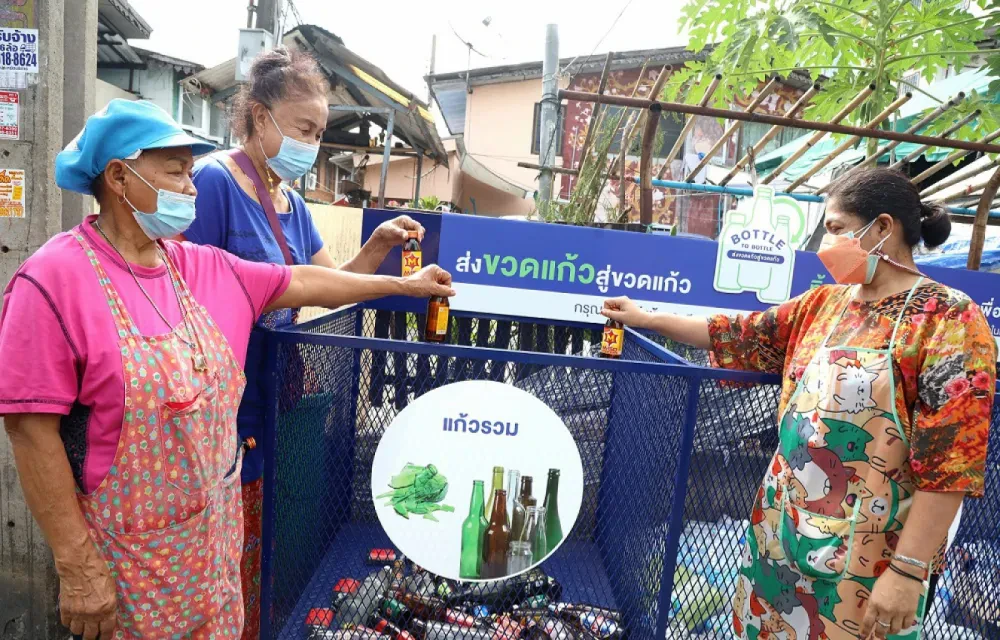
“Bottle to Bottle” Project
Osotspa has continued the Bottle-to-Bottle Project for the fourth consecutive year to promote the collection, sorting, and recycling of glass bottles in line with circular economy principles. The initiative engages partners and more than 375 households to support responsible packaging management throughout the packaging life cycle. The project contributes to reducing environmental impacts by alleviating pressure on ecosystems associated with the extraction of virgin natural resources, waste disposal, and the leakage of waste into the environment.
In 2025, the project collected and sorted more than 100.03 tons of glass bottles for recycling, representing a 9.64% increase compared to 2024, and avoided approximately 83.05 tons of carbon dioxide equivalent (tCO₂e) emissions, equivalent to planting around 3,800 trees.
From a biodiversity perspective, the initiative plays an important role in reducing pressures on nature by decreasing reliance on virgin resources, minimizing the volume of waste requiring final disposal, and reducing the risk of packaging waste leaking into waterways, communities, and surrounding ecosystems. The project also promotes active participation among communities and value chain partners, serving as an important mechanism for raising awareness and encouraging more sustainable waste management behaviors.
Looking ahead, the Company will continue to strengthen project monitoring and evaluation through circular economy and nature-related indicators, including recycled materials reintroduced into production, glass bottles recovered for beneficial use, and stakeholder participation. These efforts support more systematic disclosure of biodiversity impact mitigation measures and positive environmental outcomes.
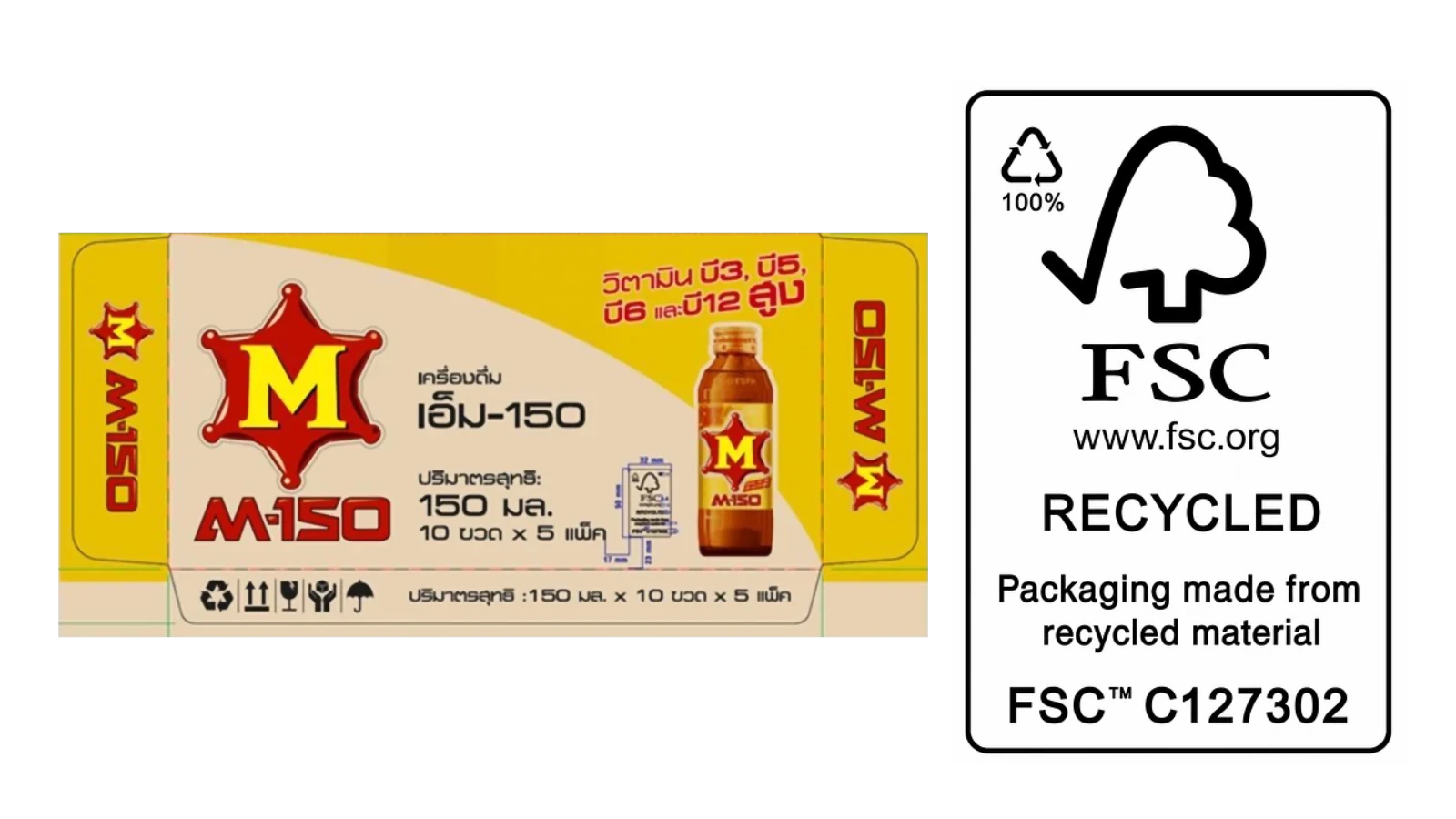
FSC-certified Packaging Initiative
The Company is committed to advancing its business operations alongside environmental responsibility through the use of FSC-certified recycled packaging cartons. This initiative reflects the Company's support for the use of recycled materials, responsible forest resource management, and efforts to reduce pressure on forests and the ecosystems that depend on them.
The initiative covers a wide range of products distributed in both domestic and international markets, including energy drinks and functional beverages under the Company's flagship brands, such as M-150, Lipo, and C-Vitt. By adopting FSC-certified packaging, the Company promotes greater transparency throughout its supply chain and supports its commitment to reducing indirect impacts on nature arising from the sourcing of packaging materials.
From a biodiversity perspective, the use of FSC Recycled-certified packaging helps reduce the demand for virgin wood fibre, mitigate risks associated with land-use change and deforestation, and promote the efficient use of recycled and renewable resources. The Company will further consider expanding its monitoring and disclosure practices to cover indicators such as the proportion of certified forest-based packaging materials relative to total forest-based packaging consumption, as well as the scope of products, countries, and suppliers involved. These efforts aim to strengthen transparency and support responsible sourcing practices throughout the value chain.