





Supply Chain Sustainability


Highlight Performance


2025 Target
*Suppliers of Herb, Cullet and Spare PartsCreate Economic Opportunities for Local / Small Suppliers*

2025 Target
Enhance the Livelihoods of Local Herbal Farming Suppliers

2025 Target
of critical suppliers will be subject to an ESG assessment

Responsible supply chain management is a strategic priority for Osotspa, as significant business value and material risks arise beyond the Company’s direct operations, including the sourcing of raw materials and packaging, transportation activities, and suppliers’ labor practices. This is particularly important in a business environment where consumers, investors, and global business partners increasingly expect transparency, traceability, and robust human rights and environmental standards across the entire supply chain.
According to the International Labor Organization (ILO), approximately 27.6 million people globally are in situations of forced labor, highlighting the need to strengthen due diligence and monitoring of labor standards across supply chains. At the same time, climate-related pressures have made environmental management an increasingly important condition for trade and procurement. CDP has reported that supply chain greenhouse gas emissions are, on average, 11.4 times higher than companies’ operational emissions, underscoring the importance of managing climate impacts beyond direct operations. In response, Osotspa is committed to systematically enhancing supplier risk management and creating shared value with its business partners. These efforts aim to strengthen the long-term resilience of the Company’s supply chain. Osotspa recognizes suppliers as key stakeholders and has therefore designated supply chain management as one of the Company’s strategic material topics.
Local Procurement Commitment
Osotspa is committed to promoting local procurement by prioritizing opportunities for qualified local suppliers and small-scale suppliers, particularly suppliers of agricultural raw materials and cullet, where commercially and operationally feasible. This approach supports local economic opportunities and strengthens the resilience of Osotspa’s supply chain.

Management Approach
Osotspa conducts responsible supply chain management under an organization-wide Procurement Policy, guided by the principles of transparency, accountability, and fairness to business partners.
The Company has established the Supplier Sustainable Code of Conduct (SCoC) as the minimum ESG standard for suppliers and has elevated supply chain management as a strategic priority of the organization. The Company manages supplier risks systematically in accordance with ISO 20400 Sustainable Procurement, for which Osotspa has been certified since 2023.
This approach covers supplier selection and registration, supplier categorization based on significance and risk, supplier assessment and monitoring, including on-site assessments, as well as the establishment of corrective action plans and follow-up processes. Osotspa also continuously strengthens supplier capabilities to support long-term responsible business practices. In addition, the Company is accelerating the enhancement of traceability and data management through digital technology to increase transparency and efficiency in procurement. These efforts support the management of risks related to raw materials, logistics, human rights, water resources, and greenhouse gas emissions across the supply chain. They are also implemented in parallel with the sustainable sourcing of agricultural raw materials in line with the Company’s Sustainable Agriculture Commitment and relevant standards.

Sustainable Agriculture Commitment
Osotspa has announced its Sustainable Agriculture Commitment as a framework for the sustainable procurement of agricultural raw materials. The commitment aims to source agricultural raw materials from production areas that are managed in accordance with appropriate standards, do not cause adverse environmental impacts, and continuously support the capability development of workers in the agricultural sector. Key agricultural raw materials, including sugarcane, cassava, corn, palm oil, and soybeans, must be sourced from production areas certified under responsible production standards, such as BonSucro or RSPO, or other relevant standards, and must be traceable. These raw materials must also be managed with appropriate environmental and social practices, including reduction of greenhouse gas emissions, efficient use of energy and water resources, prohibiting child labor and forced labor, occupational health and safety management, compliance with business ethics, and protection of ecosystems and biodiversity. This approach helps raise the Company’s raw material sourcing standards and contributes to positive environmental and social impacts, as well as the long-term sustainability of the industry.
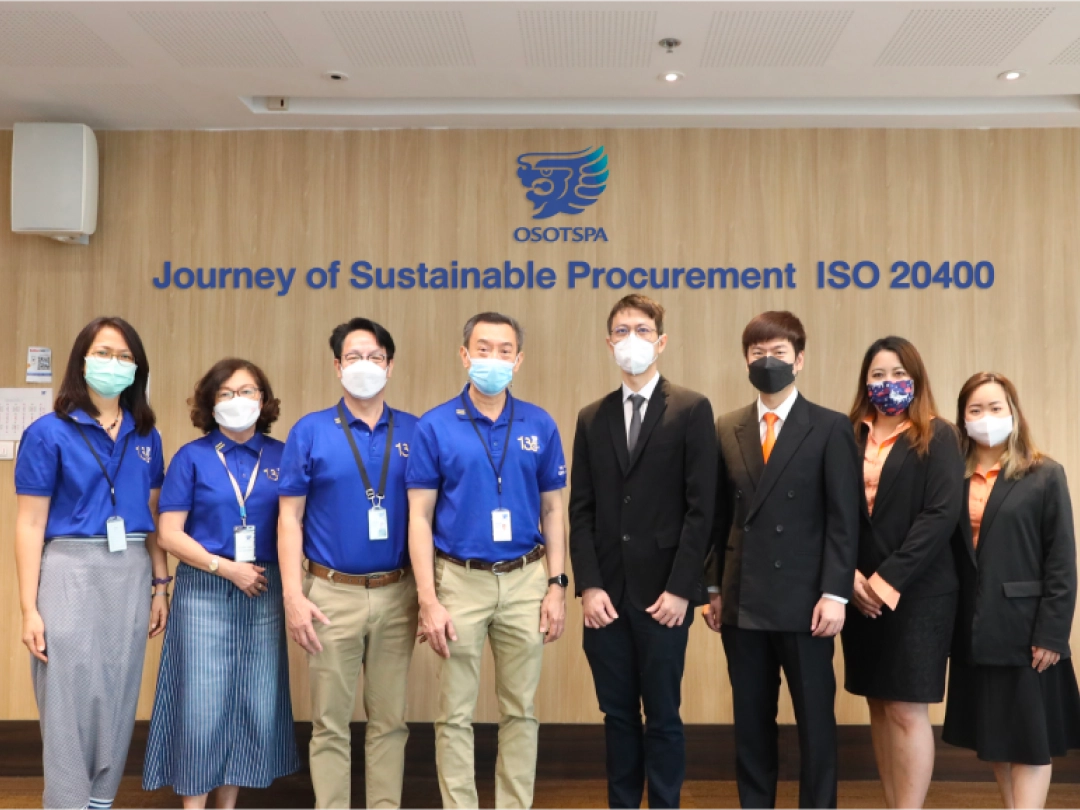
Supply Chain Management Governance Structure
Responsible supply chain management is integrated into Osotspa’s Strategic Procurement and Supply Chain function, which reports directly to the Chief Executive Officer. Work plans and performance results are regularly presented to the Executive Committee and the Nomination, Remuneration, Corporate Governance and Sustainable Development Committee. In addition, progress is reported to the Board of Directors at least once a year. This governance structure ensures that responsible supply chain management is aligned with the Company’s policies, business strategy, and sustainability direction, while providing appropriate oversight and accountability at both management and Board levels.

Supply Chain Management Strategies
Osotspa’s supply chain management strategy focuses on optimizing resource efficiency while creating long-term value for suppliers, stakeholders, society, and the environment. The Company implements this strategy through the following key approaches:
- Osotspa builds collaboration with suppliers and business partners to develop knowledge, apply technology, and promote innovations that improve efficiency and productivity, while reducing impacts on consumers and the environment.
- The Company continuously assesses opportunities and risks across the value chain. Osotspa also provides communication channels between the Company and its suppliers to enable mutual learning, joint problem-solving, and continuous improvement.
- Osotspa promotes responsible business conduct in accordance with sustainability principles and the Company’s Supplier Code of Conduct. This approach helps raise standards across the value chain and create positive impacts at the industry level.
Supplier Relationship Management
Osotspa applies Supplier Relationship Management (SRM), integrated with ISO 20400 Sustainable Procurement and other relevant international standards, as the operational framework for supply chain management. This framework is designed to enhance supplier selection, risk management, and sustainable collaboration with business partners. The key components are as follows:
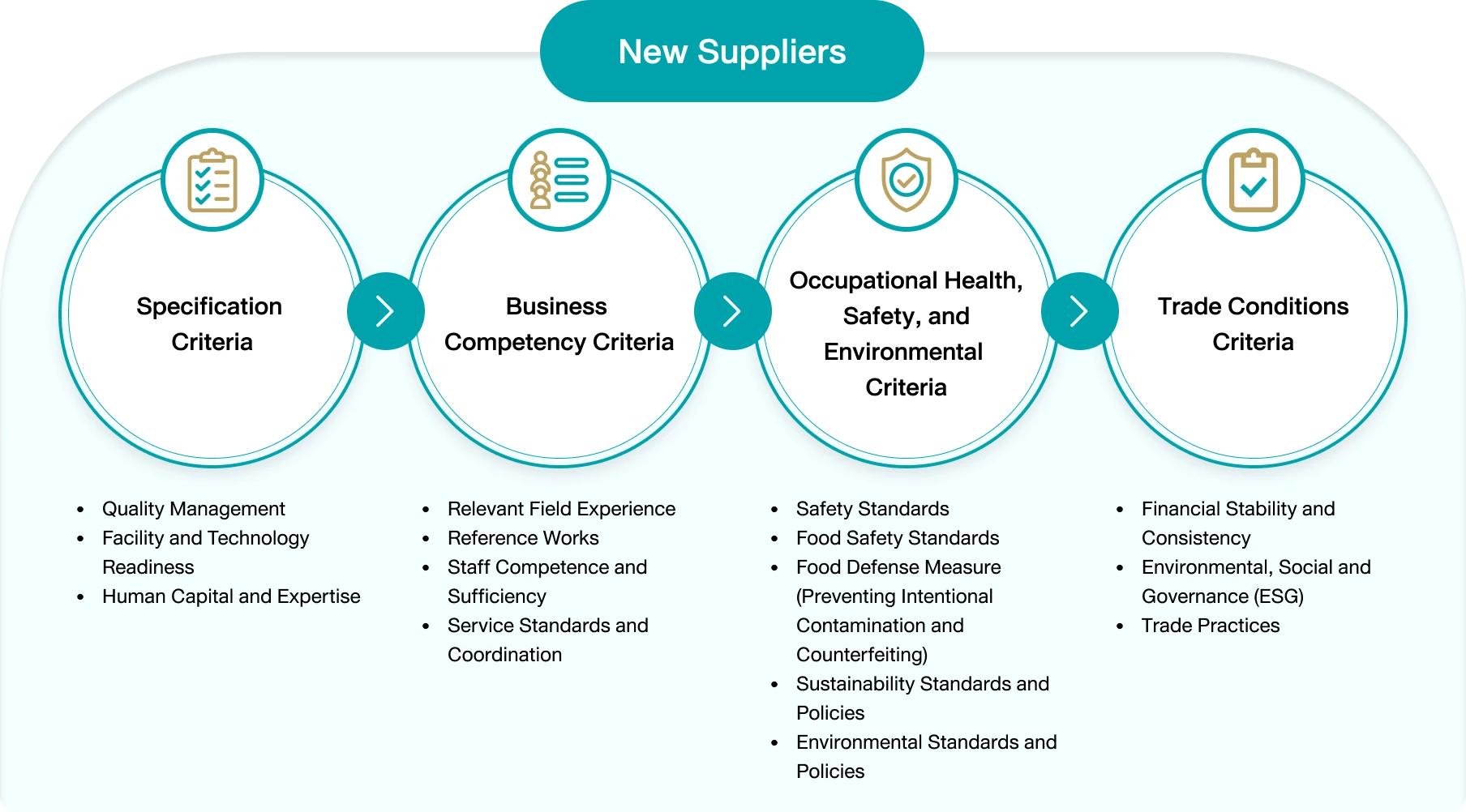
Supplier Selection
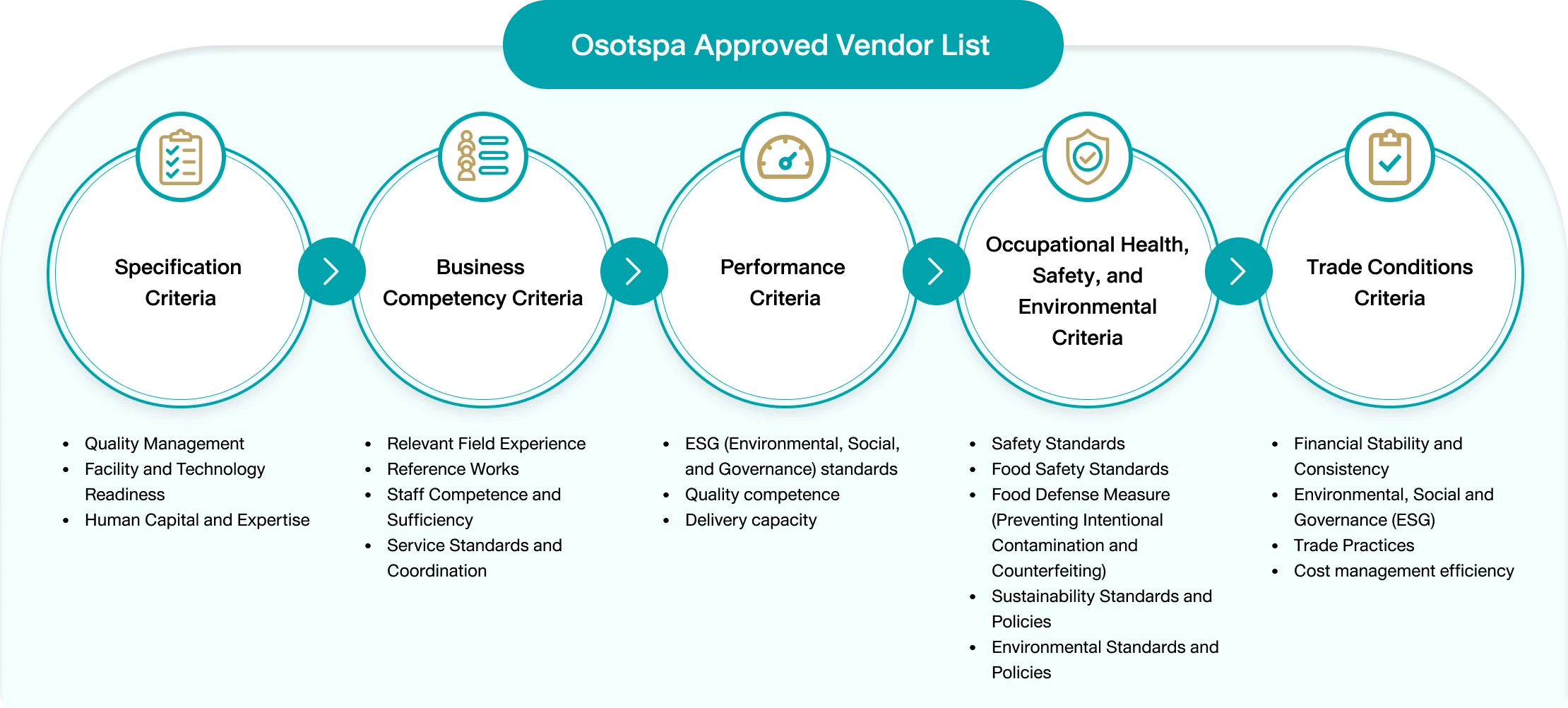
Osotspa has established criteria for the sourcing and selection of new suppliers, as well as the periodic review of existing suppliers in the supplier registry. The criteria cover the following aspects:
Supplier Screening
Osotspa conducts a systematic, company-led supplier screening process to identify suppliers with significant business relevance and potential environmental, social and governance (ESG) risks. The screening is conducted as a desk-based risk assessment prior to further supplier ESG assessment and due diligence.
The screening considers the following criteria:
- Environmental, Social and Governance (ESG) risks, including environmental management, human rights and labor practices, occupational health and safety, business ethics, and anti-corruption risks, including corruption and bribery.
- Business relevance, including procurement value, strategic importance, supplier substitutability and other factors that may affect business continuity;
- Country-specific risks, including economic, social, political, regulatory and other external risks associated with the countries or regions where suppliers operate;
- Sector-specific risks, considering sustainability and operational risks associated with the supplier’s industry or business sector; and
- Commodity-specific risks, including risks associated with key raw materials and commodities, such as price volatility, availability, environmental and social impacts, and product quality and safety.
The results of the supplier screening process are used to determine the appropriate level of subsequent assessment, monitoring and due diligence. Suppliers identified as having significant business relevance or elevated ESG risk are subject to further assessment in accordance with Osotspa’s supplier risk management process, which may include supplier self-assessment, document review, on-site assessment and corrective action follow-up.
Osotspa applies its Procurement process for suppliers to intermediaries, including lobbyists engaged on the Company’s behalf. As part of this process, intermediaries are subject to risk-based screening that considers corruption and bribery risks. Screening results determine the appropriate level of further assessment, monitoring, and due diligence. Osotspa communicates its anti-corruption requirements to intermediaries, including lobbyists engaged on the Company’s behalf, through the Supplier Sustainable Code of Conduct as part of the supplier process. Intermediaries are required to acknowledge and comply with the Code, which covers anti-corruption.
Supplier Categorization
To effectively drive the sustainability strategy, Osotspa employed ISO 20400 Sustainable Procurement standards to manage suppliers. The categories of suppliers are defined as follows:
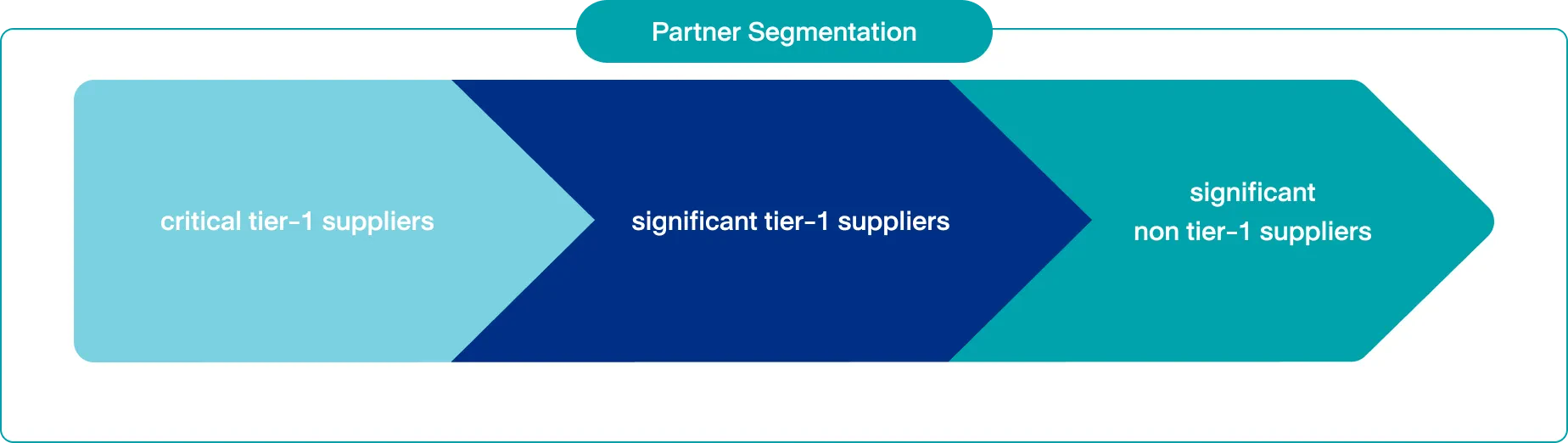
- Critical Tier 1 Suppliers - Keysuppliers that have significant business relevance to Osotspa in both Direct Material and Indirect Material categories. These suppliers account for 61% of the Company’s total procurement value, are included in Osotspa’s registered supplier list, and/or have joint projects with the Company, or are suppliers that are difficult to substitute.
- Significant Tier-1 Suppliers - Critical Tier-1 Suppliers that have undergone ESG assessment and have been identified as having a high level of ESG risk based on the Company’s defined criteria.
- Significant non-Tier-1 Suppliers - Key suppliers of Significant Tier-1 Suppliers that are considered high-risk and highly important to Osotspa’s business. These may include, for example, smallholder farmers or raw material producers that supply materials to Tier-1 suppliers.
Supplier Risk Management
Osotspa conducts regular supplier assessments and monitoring to manage risks across the supply chain, particularly environmental, social, and governance (ESG) risks. The Company applies mechanisms and tools that are aligned with international standards to prevent, reduce, and remediate potential impacts, while continuously raising suppliers’ operating standards.

Supplier Sustainable Code of Conduct
Osotspa has established the Supplier Sustainable Code of Conduct (SCoC) as a framework for responsible business conduct among suppliers. The SCoC covers key issues including human rights and labor practices, compliance with local minimum wage laws, fair wages and a commitment to promote living wages that meet or exceed local living wage benchmarks, forced labor, child labor, working conditions, occupational health and safety, harassment, discrimination, freedom of association, collective bargaining, pollution reduction and waste management, efficient use of resources, biodiversity and land conservation, anti-corruption, anti-competitive practices, and conflicts of interest. The SCoC is designed to strengthen the Company’s supply chain, enhance business opportunities, and reduce operational risks. All suppliers are required to acknowledge and comply with the SCoC. In the event of any material breach of the requirements, the Company may consider reviewing or terminating the business relationship.
Supplier Communications and Acknowledgement of SCoC in 2025
| Suppliers | % of coverage | |
|---|---|---|
| New Suppliers | 276 | 100% |
| Tier-1 Suppliers | 1,761 | 100% |

Supplier Self-Assessment
Osotspa requires Critical Tier 1 Suppliers and new suppliers with high ESG risk to complete a self-assessment questionnaire. The purpose is to assess suppliers’ capabilities and current practices in responsible business conduct. The assessment topics are aligned with the requirements of Osotspa’s Supplier Sustainable Code of Conduct (SCoC) and the Sustainability Accounting Standards Board (SASB) Standards. The results of the risk assessment are used to identify Significant Tier-1 Suppliers, which refer to Critical Tier-1 Suppliers with high ESG risk.
The Company has set a target to ensure that 100% of suppliers meeting the defined criteria are assessed annually.
| Suppliers | % of coverage | |
|---|---|---|
| New suppliers whose ESG assessment results are classified as high risk. | 276 | 100% |
| Critical Tier-1 Suppliers | 33 | 100% |
Onsite Audit at Suppliers’ Workplace
Significant Tier-1 Suppliers are subject to on-site assessments conducted by both internal functions, as second-party assessments, and external experts, as third-party assessments. The assessments cover ESG issues in accordance with Osotspa’s Supplier Sustainable Code of Conduct (SCoC) and are aligned with ISO 20400 Sustainable Procurement. The Company has set a target to conduct on-site assessments for 100% of Significant Tier-1 Suppliers by 2025.
Osotspa has established criteria for findings identified during supplier on-site assessments. The findings are classified by level of severity as follows:

Potential Findings

General Findings

Potential for Improvement

Good Practices
In 2025, Osotspa conducted on-site assessments of Significant Tier-1 Suppliers, defined as Critical Tier-1 Suppliers with high ESG risk. The assessment results were as follows:
| Suppliers | |
|---|---|
| Significant Tier-1 Suppliers with high risks that received an on-site assessment | 14 |
| Significant Tier-1 Suppliers with findings | 14 |
| Significant Tier-1 Suppliers that were subject to contract review due to findings or material non-compliance | 0 |
Third-Party Supplier On-Site Assessment
In 2025, Osotspa conducted independent third-party on-site sustainability assessments for 14 suppliers identified through its supplier ESG risk assessment process. The assessments were conducted by TÜV NORD (Thailand) Limited, an external independent audit organization.
The assessments covered environmental management, human rights and labor practices, occupational health and safety, governance, product quality and other relevant sustainability requirements. The audit process included management and employee interviews, on-site observations, and verification of relevant documents and records.
Identified findings were classified according to their level of severity. Suppliers were required to establish corrective and improvement action plans within defined timelines, with implementation progress and supporting evidence subject to follow-up and verification by Osotspa and/or the external auditor.
Significant Tier-1 Suppliers with Findings in Categories
| Potential Findings | General Findings | Potential for Improvements | Best Practices | |
|---|---|---|---|---|
| Significant Tier-1 Suppliers with Findings in Categories: | 9 | 9 | 13 | 7 |
Osotspa provides suppliers with assessment reports and follows up on corrective actions within the specified timeframe. The Company also supports supplier capability development through training and knowledge-sharing activities. If a supplier is unable to remediate identified gaps within the required timeframe, Osotspa may consider reviewing or terminating the business relationship, as appropriate.
Osotspa monitors and reports the coverage and progress of its supplier assessment and development program based on unique significant suppliers identified through the supplier screening process. The scope covers both Tier-1 and non-Tier-1 suppliers.
In 2025, Osotspa maintained a structured supplier ESG assessment and development process covering supplier self-assessment, second-party and third-party on-site assessments, corrective action follow-up, and supplier capacity-building activities.
Osotspa identified 33 Critical Tier-1 Suppliers as significant suppliers based on business relevance and ESG risk considerations. In addition, 213 significant non-Tier-1 suppliers were identified within the extended supply chain, including upstream farmers and raw material suppliers. Supplier assessment and development activities are prioritized based on risk, business relevance, complaints, special issues, and other relevant factors.
In 2025, 14 Significant Tier-1 Suppliers identified as high ESG risk underwent on-site sustainability assessments. The assessments covered environmental, social, occupational health and safety, governance, product quality and other sustainability-related requirements. All suppliers assessed with substantial actual or potential negative impacts were subject to agreed corrective action and improvement plans, including root-cause analysis, defined actions, implementation timelines and evidence-based closure. No supplier was terminated as a result of substantial actual or potential negative ESG impacts during the reporting year.
Osotspa also supports supplier development through training, workshops, knowledge-sharing, corrective-action implementation support, re-assessments and capacity-building programs. Supplier development measures are designed to strengthen suppliers’ ESG capabilities and support continuous performance improvement across the supply chain.
Osotspa’s supplier screening, assessment, audit follow-up and capacity-building processes have been independently reviewed by TÜV NORD (Thailand) Limited. The independent verification confirmed that Osotspa had established and implemented supplier screening criteria, supplier assessment processes, audit reporting, corrective action follow-up and supplier capacity-building/development programs. TÜV NORD also reviewed sample supplier audit reports and verified the implementation of corrective actions and evidence-based closure.
The supplier screening, assessment, corrective action and capacity-building processes were independently verified by TÜV NORD (Thailand) Limited in 2025. The verification included review of supplier screening criteria, supplier assessment procedures, sample supplier audit reports, corrective action closure evidence and supplier development/capacity-building records. TÜV NORD confirmed that these processes were established, implemented and maintained effectively. Actual 2025 supplier assessment performance is publicly reported in Osotspa Sustainability Report 2025, page 130 and in this webpage.
| Supplier Assessment and Development KPI | FY2025 |
|---|---|
| Total number of Tier-1 suppliers | 1,761 |
| Number of significant suppliers | 33 |
| Number of significant suppliers supported with development measures | 14 |
| Percentage of significant suppliers supported with development measures | 42.42% |
| Number of significant suppliers assessed via desk and/or on-site assessments | 14 |
| Percentage of significant suppliers assessed | 42.42% |
| Number of assessed significant suppliers identified with substantial actual or potential ESG impacts | 14 |
| Number of suppliers with substantial actual or potential ESG impacts with agreed corrective action / improvement plans | 14 |
| Percentage with agreed corrective action / improvement plans | 100% |
| Number of suppliers terminated due to substantial actual or potential ESG impacts | 0 |
Supplier assessment and development KPIs are reported based on unique suppliers to avoid double counting suppliers participating in multiple assessment or development activities. Significant suppliers are identified through Osotspa’s supplier screening process based on ESG risk and business relevance. Suppliers may undergo desk assessments, on-site assessments, corrective action follow-up and supplier development activities depending on their risk profile. In 2025, 14 significant suppliers identified as high ESG risk underwent desk and/or on-site sustainability assessments and were supported through corrective action and supplier development measures.
Monitoring Supplier Compliance and Managing ESG Issues
Osotspa continuously monitors the ESG performance of significant suppliers using information from on-site assessments, supplier self-assessments, and the follow-up of Corrective Action Plans. This process ensures that suppliers’ operations remain aligned with the Company’s requirements and relevant standards.
In the reporting year, Critical Tier-1 Suppliers were fully monitored in accordance with the defined plan, and no cases of material non-compliance with environmental and social requirements were identified. If improvement areas are identified, the Company will work with suppliers to establish Corrective Action Plans, monitor progress, and evaluate implementation on an ongoing basis. Osotspa may consider reviewing or terminating the business relationship if a supplier is unable to complete the required improvements within the specified timeframe.
Supplier Capabilities Development
Osotspa continuously monitors and develops supplier capabilities to enhance suppliers’ knowledge and understanding of sustainability and compliance with relevant requirements. In 2025, the Company communicated the Supplier Sustainable Code of Conduct (SCoC) and organized training activities on ESG, laws, and key requirements for new suppliers, existing registered suppliers, and key suppliers of suppliers.
Engagements with Suppliers
Osotspa works with a diverse range of suppliers, from multinational companies and community enterprises to small and medium-sized enterprises (SMEs), to source raw materials, packaging materials, spare parts, logistics services, and OEM manufacturing services. The Company recognizes supplier relationship management as an important element of stakeholder engagement and places strong emphasis on suppliers as key stakeholders. Osotspa promotes supplier capability development, innovation, and environmental and social responsibility to raise standards across the supply chain and support the Company’s sustainable development goals.
In 2025, Osotspa implemented the following engagement activities:
Supporting Sustainable Packaging through Supplier Collaboration
Osotspa demonstrates its commitment to Sustainable Packaging through collaboration with Tier-1 Suppliers and Significant Non-Tier-1 Suppliers. The collaboration aims to promote the use of materials and production processes that reduce environmental impacts, including reducing the use of harmful plastics, minimizing waste, and promoting packaging that is reusable, recyclable, or compostable.

Can-to-Can Journey Project
Osotspa promotes the sustainable use of aluminium packaging by reducing packaging weight and increasing the circularity of aluminium cans in line with circular economy principles. This is carried out through collaboration with partners to recycle whole aluminium cans while maintaining the original material quality. The Company also communicates this initiative through the Aluminium Loop symbol to raise consumer awareness and encourage participation in aluminium recycling.
Performance and Benefits
- Reduced packaging procurement costs by approximately 7% through packaging lightweighting.
- Reduced greenhouse gas emissions using recycled aluminium.
- Improved efficiency in the sorting and recycling of aluminium cans.
- Enhanced resource efficiency in line with circular economy principles.
- Strengthened Osotspa’s corporate image in sustainable packaging and promoted consumer engagement.
Plastic Recycling Project
Osotspa uses post-consumer plastic waste to produce Post-Consumer Recycled Resin (PCR), which is blended with Virgin Resin to produce beverage packaging. This initiative promotes resource efficiency and helps reduce environmental impacts by supporting the circular use of plastic materials.
Performance and Benefits
- Reduced procurement costs for Virgin Resin by approximately 3%.
- Became the first manufacturer to use PCR blended with Virgin Resin for packaging film.
- Reduced greenhouse gas emissions using recycled materials.
- Increased the value of waste materials and enhanced sustainable production processes.
- Streamlined the procurement process through an MOU with recycling partners.
- Strengthened Osotspa’s corporate image in sustainable packaging.

FSC-Certified Paper Box Project
Osotspa procures paper packaging from sources certified by the Forest Stewardship Council (FSC) to support sustainable forest management, reduce deforestation risks, and enhance transparency in traceability.
Performance and Benefits
- Established a standard for environmentally friendly packaging without increasing costs.
- Reduced legal and regulatory risks related to international environmental requirements.
- Supported sustainable forest management and reduced deforestation risks.
- Enhanced transparency in raw material traceability.
- Strengthened Osotspa’s credibility in sustainability.
Supply Chain Collaboration for GHG Emissions Reduction
Osotspa promotes collaboration with suppliers to support greenhouse gas emissions reduction across the supply chain, with a particular focus on Scope 3 emissions, which are a key component in achieving the Company’s Net Zero target by 2050. The Company advances this effort through the development of efficient and environmentally friendly logistics and transportation solutions.
Osotspa provides in-depth technical support to selected suppliers to strengthen their ESG capabilities and accelerate the implementation of sustainability solutions.
In 2025, Osotspa collaborated with relevant logistics and transportation suppliers on the transition toward electric vehicle (EV) transportation. The program involved joint technical and commercial feasibility studies, including the identification of suitable EV transportation approaches, assessment of operational requirements, and analysis of economic feasibility and break-even considerations.
Osotspa worked directly with suppliers to identify practical implementation pathways and supported engagement and advocacy with relevant stakeholders to address implementation barriers. The collaboration was designed to build supplier capabilities, support informed investment decisions, and enable measurable improvements in transportation-related environmental performance.
Progress and implementation opportunities were reviewed jointly with suppliers as part of Osotspa’s ongoing supplier development and sustainability management process.
The program was implemented over a period of more than 6 months in 2025-2026, involving multiple rounds of technical analysis, supplier engagement, feasibility assessment and implementation planning.
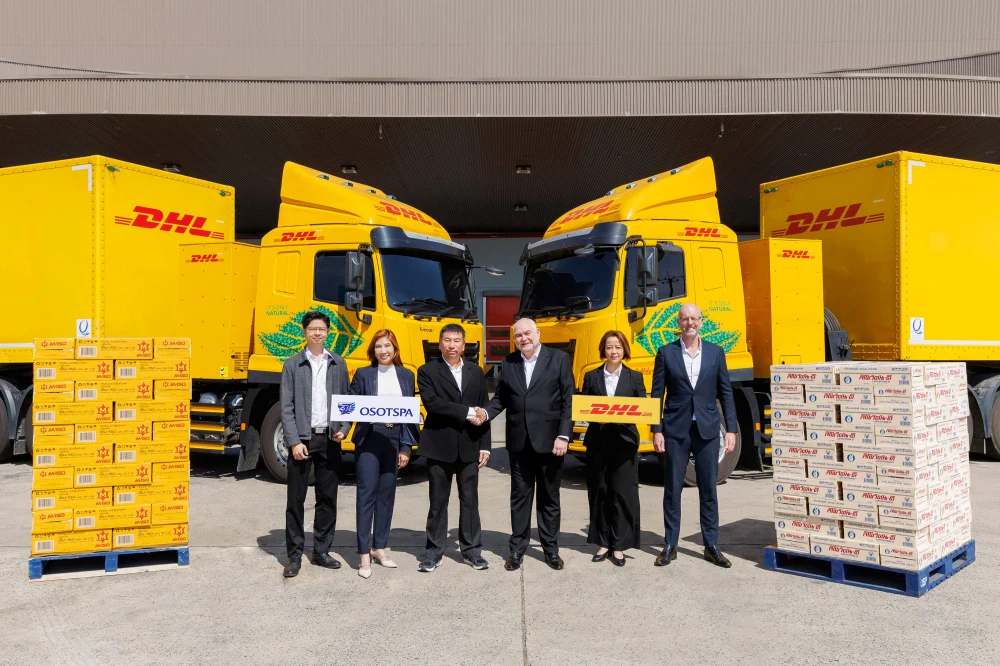
Green Logistics Project
Osotspa reduces fuel energy consumption and greenhouse gas emissions from product transportation through collaboration with DHL Supply Chain (Thailand) Limited by introducing electric vehicles into the Company’s product distribution process.
Performance and Benefits
- Reduced greenhouse gas emissions from product distribution.
- Reduced fossil fuel consumption in transportation activities.
- Reduced air pollution from internal combustion engine vehicles.
- Supported Osotspa’s Net Zero target and Scope 3 emissions management.
Strengthening Supplier Relationships and Engagement
Osotspa conducts activities to strengthen strategic relationships with suppliers and raise ESG standards across the supply chain through continuous supplier engagement, as follows:



Buyer and Procurement ESG Training
Osotspa provides regular ESG-related training and capability development for buyers, procurement personnel, and relevant internal stakeholders to strengthen their roles in implementing the Company’s responsible and sustainable procurement practices.
The training is designed to enhance understanding of how environmental, social and governance considerations are integrated into supplier sourcing, screening, selection, assessment, monitoring and development. Key topics include ESG principles and supplier ESG requirements, ESG risk identification and management, human rights and responsible business practices in the supply chain, and circular economy approaches relevant to procurement activities.
In 2025, training topics included ESG and ESG risk management, human rights considerations in the supply chain, and circularity in glass bottle procurement and management. These sessions helped buyers and relevant internal teams better identify sustainability risks and opportunities, incorporate ESG considerations into procurement decisions, and engage suppliers on corrective actions and continuous improvement.
Through ongoing training and knowledge sharing, Osotspa aims to strengthen the capability of its procurement teams to consistently apply the Supplier Sustainable Code of Conduct, sustainable procurement principles and supplier ESG requirements throughout the supplier lifecycle. The training also clarifies the roles and responsibilities of buyers and relevant internal stakeholders in supplier ESG screening, risk assessment, supplier evaluation, corrective action follow-up and supplier development.

Commodity Price Volatility Risk Management
Osotspa places importance on risks that may arise from commodity price volatility. The Company closely monitors price trends and establishes procurement strategies that are aligned with market conditions.
In addition, Osotspa has developed a plan to review and test contingency plans to respond to events that may affect the procurement process. The Company also prepares supplier information and supplier location mapping to assess and mitigate potential impacts in high-risk areas. This approach emphasizes rapid response and effective mitigation of impacts on the supply chain.

Payment to Suppliers
Osotspa strictly complies with contractual obligations and agreed commercial terms with its suppliers. Under the Company’s policy, payments to suppliers are made on the 5th day of each calendar month. If the Company is unable to comply with the agreed payment terms due to specific circumstances, Osotspa will communicate and provide clarification directly to the relevant parties and jointly seek a fair payment resolution. In addition, the Company’s standard credit term for supplier payments is within 60 days, in accordance with the commercial terms agreed between the Company and its suppliers. Actual payment performance remains within the defined criteria. For suppliers that are small and medium-sized enterprises (SMEs), Osotspa has established a shorter payment term of within 30 days to support suppliers’ liquidity and business stability.
| Payment Terms | Average Actual Payment Period | |
|---|---|---|
| General Suppliers | 60 days | 73 days |
| Small and Medium-sized Suppliers (SME) | 30 days | 30 days |