




Waste Management
Waste Management
Waste management, including food loss and food waste management, represents an important opportunity for Osotspa to enhance operational efficiency across the value chain. This includes improving production processes, managing raw materials, and designing packaging that supports waste reduction and recycling. The application of circular economy principles and waste management innovations also helps reduce long-term costs, create added value from waste, strengthen stakeholder confidence, and support the Company’s environmental and sustainability goals in line with international expectations.
However, waste and food waste management also face challenges from the complexity of diverse production processes, the need to change the behavior of employees and suppliers, and limitations in waste separation infrastructure and systems in certain areas. In addition, the collection of complete and accurate data on food loss and food waste in alignment with international standards requires the development of monitoring systems and close collaboration with stakeholders across the supply chain.
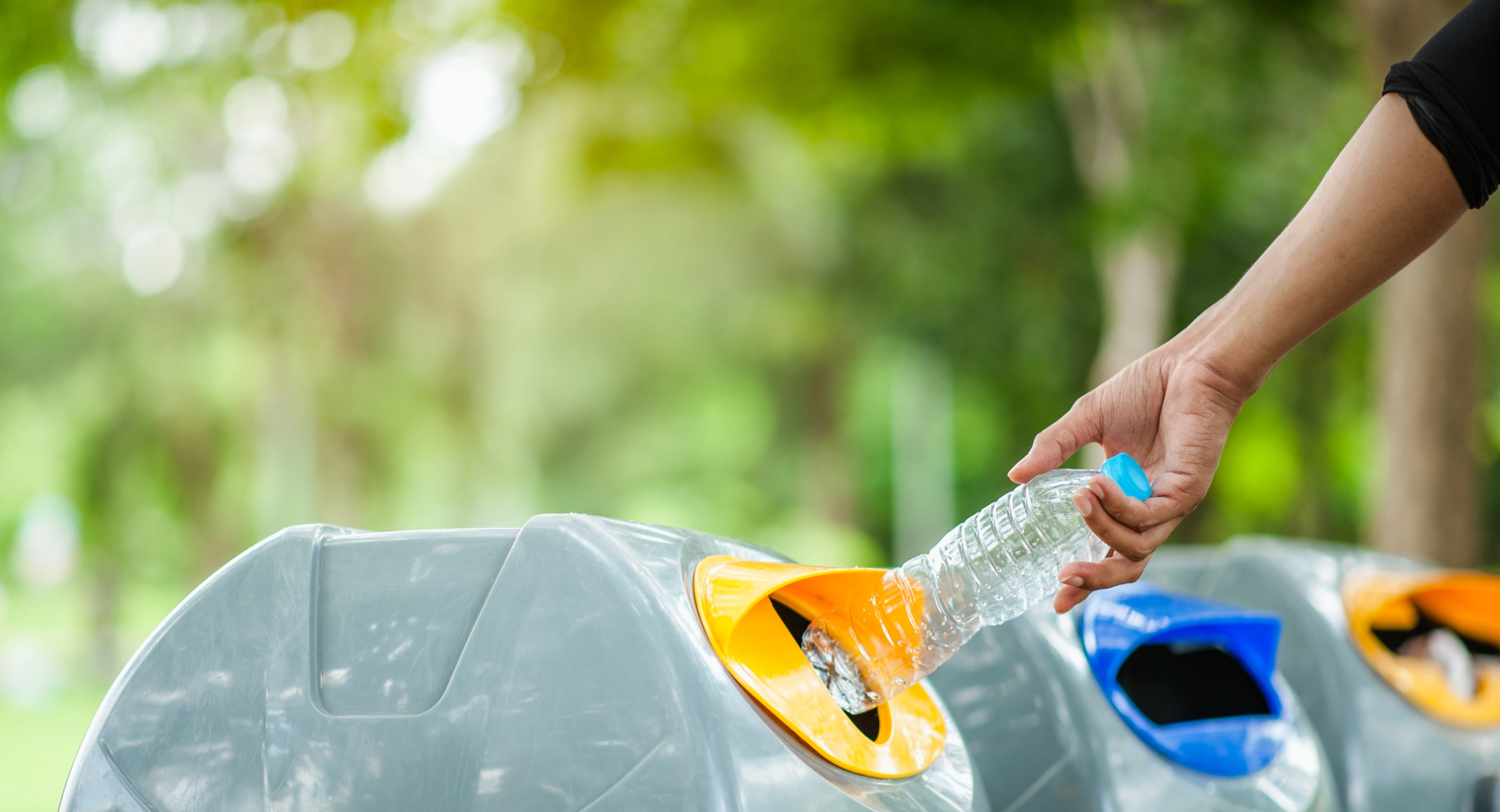
Waste management is one of the key topics under the Company’s Environmental Policy. Osotspa manages waste with a focus on preventing and reducing waste generation at source through production process efficiency improvement, appropriate raw material management, and the application of the 3Rs principles: Reduce, Reuse, and Recycle, together with circular economy concepts across all stages. The Company also conducts systematic waste segregation and transfers waste for beneficial use or recycling through partners that are certified in accordance with applicable laws and relevant requirements.

Reduce

Reuse

Recycle
Waste Management Strategy
Osotspa categorizes waste management into two areas: industrial and office waste management, and food loss and food waste management. The Company’s management strategies are as follows:
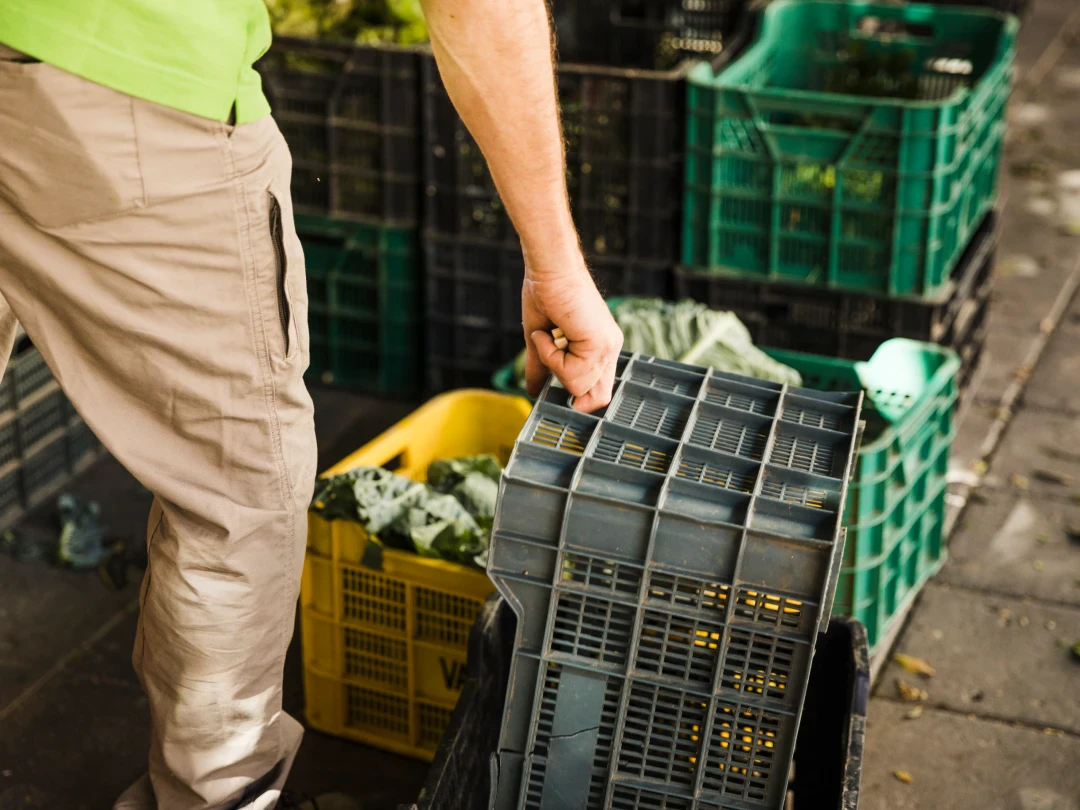
Zero Landfill Waste Management
To achieve the target of managing total waste, including industrial waste, with zero landfill, the Company focuses on reducing the amount of waste requiring final disposal. This is implemented in compliance with applicable laws and relevant requirements, while promoting circular economy principles to enhance resource efficiency and sustainably reduce environmental impacts.
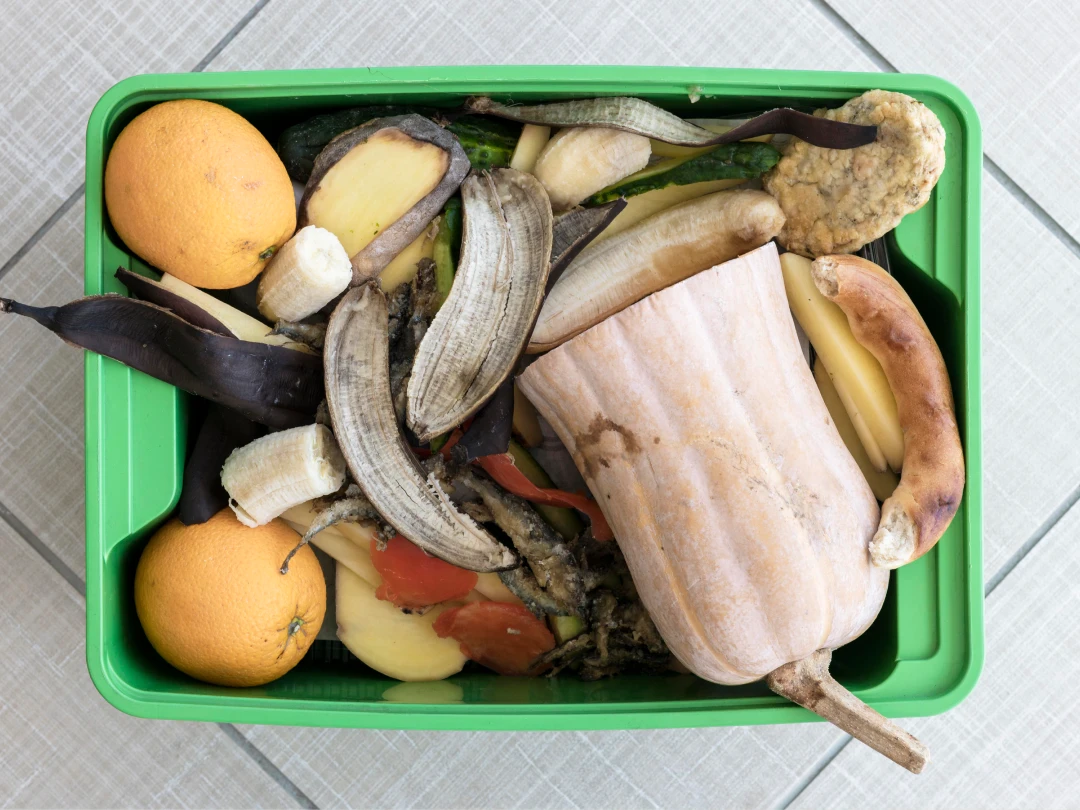
Food Loss and Food Waste Management
Osotspa places importance on reducing food loss and food waste across the value chain. The Company manages this issue systematically from production, storage, transportation, and distribution through to the consumer level, with the aim of significantly reducing food loss and food waste.

Waste audits to identify opportunities
Osotspa’s conducts waste audits to identify opportunities for improving waste performance by assessing and quantifying waste generated across its operations. The findings are used to plan appropriate waste management and resource recovery measures. As a result, the Group had zero industrial waste disposed of through landfill in 2025.
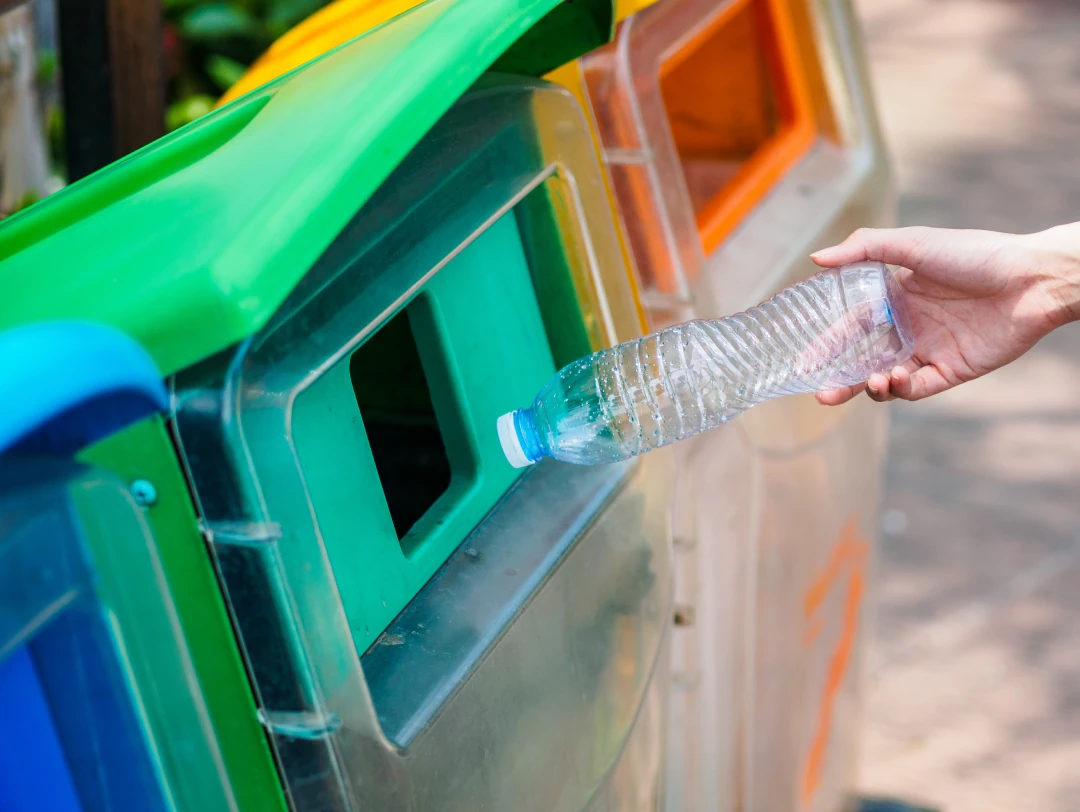
Waste diversion from landfill is certified
Osotspa’s assesses its waste diversion from landfill performance with reference to the NSF Landfill-Free Verification methodology. In 2025, the Group reported zero industrial waste directed to landfill, with the reported waste data independently verified by a third party.
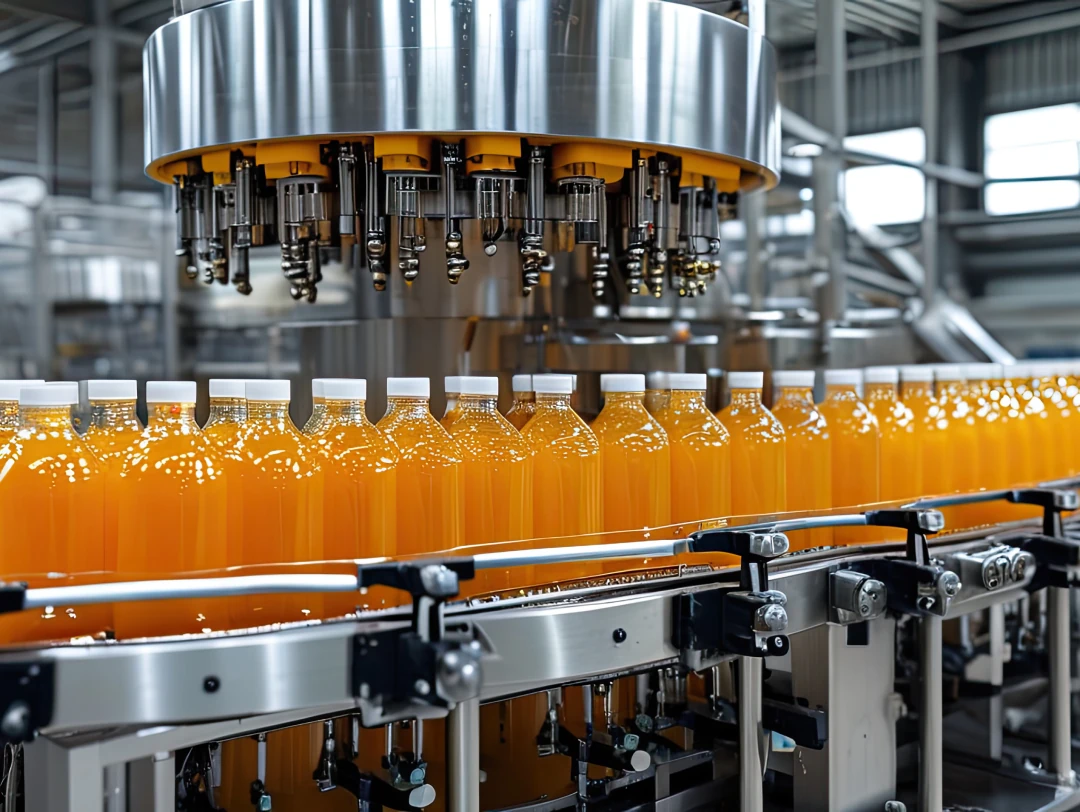
Investment in innovation or R&D to minimize waste
In 2025, Osotspa has invested over 1.5 million baht in manufacturing operations, integrating automatic product quality measurement technology and an automated control system to replace manual labor. This has resulted in reduced product loss and decreased time spent on quality inspection processes at the start of production Leading to a decrease in product loss of 287,014 Kg/Year
In addition, the Company continuously develops systems for collecting, monitoring, and reviewing food loss and food waste data to improve data accuracy and transparency in line with international standards. The data is used to evaluate performance and further improve waste management approaches. Osotspa also promotes awareness and participation among employees and suppliers across the supply chain to drive long-term sustainable waste reduction.
Food Loss & Waste Impact
| Food loss & waste | 2022 | 2023 | 2024 | 2025 | 2025 Target |
|---|---|---|---|---|---|
| A) Total weight of all food loss & waste (Tons) | 13,469.31 | 12,210.99 | 12,341.40 | 11,016.06 | 12,000 |
| B) Total weight of food loss & waste volumes used for alternative purposes (Tons) | 10,506.85 | 9,418.37 | 8,463.95 | 8,615.16 | 8,000 |
| Total food loss & waste discarded (A-B) | 2,962.46 | 2,792.62 | 3,877.45 | 2,400.90 | 3,000 |
| Coverage | 100 | 100 | 100 | 100 | 100 |
Performance on Food Loss and Food Waste Reduction by Life Cycle Stage (tons)

Production

Storage

Distribution and Logistics

Customers

Alternative Use of Food Loss and Food Waste
Waste Reduction Projects and Activities
Osotspa has established a systematic approach to managing waste from office activities by integrating its environmental strategy with continuous employee engagement. The approach covers waste reduction at source, waste segregation to increase opportunities for reuse and recycling, and the creation of environmental and social value from waste.
These efforts reflect the Company’s commitment to fostering responsible resource-use behavior in daily operations through projects designed to encourage employee participation and tangible behavior change. In 2025, Osotspa implemented key projects to reduce and manage waste from office activities as follows:

Food Loss Measurement Project
The Company established a process to monitor food loss in production and set a target to reduce food loss by 2% from the previous year. Osotspa also promoted cross-functional collaboration to improve quality control systems and product testing processes in order to reduce redundant sampling between departments. In 2025, the Company reduced food loss in the production process by 1,325.34 tonnes, equivalent to a 10.74% reduction from the previous year.
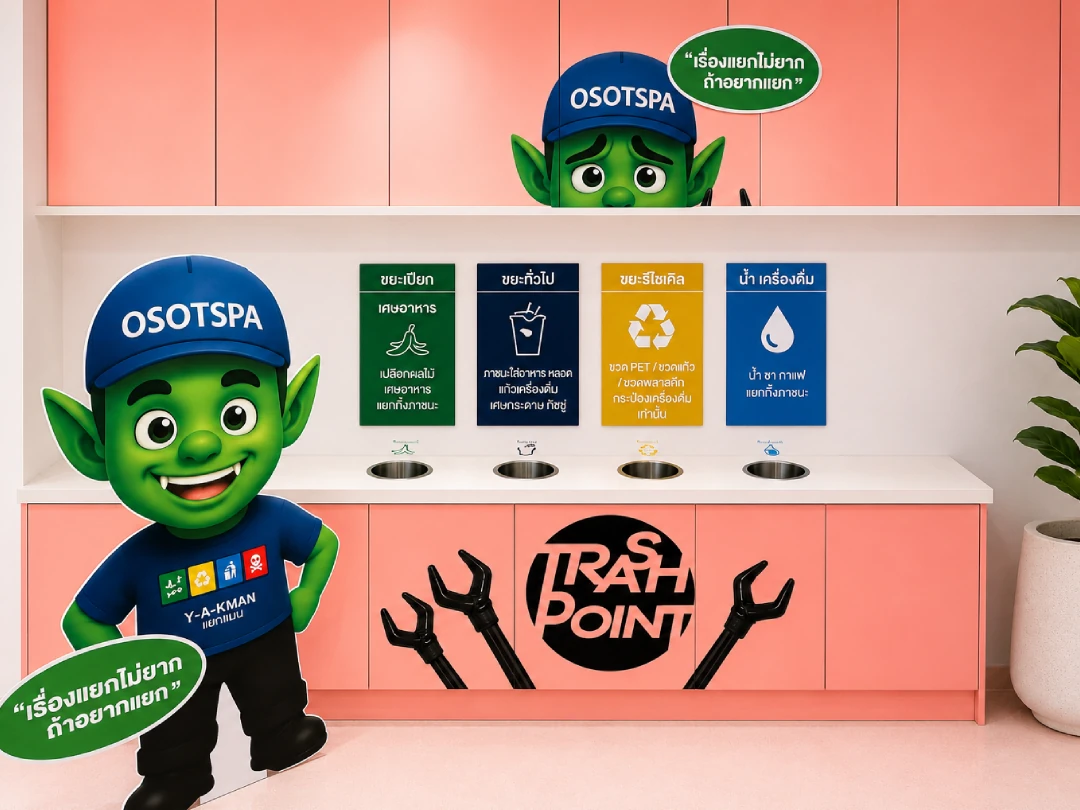
“Yak Man” Waste Segregation Project
Osotspa continuously communicated and promoted proper waste segregation within the organization. The Company monitored and evaluated employees’ waste segregation performance on a monthly basis throughout 2025. The assessment found that the proportion of incorrectly segregated waste decreased by 14% compared with the beginning of the project, reflecting improved employee understanding and behavior in waste management.
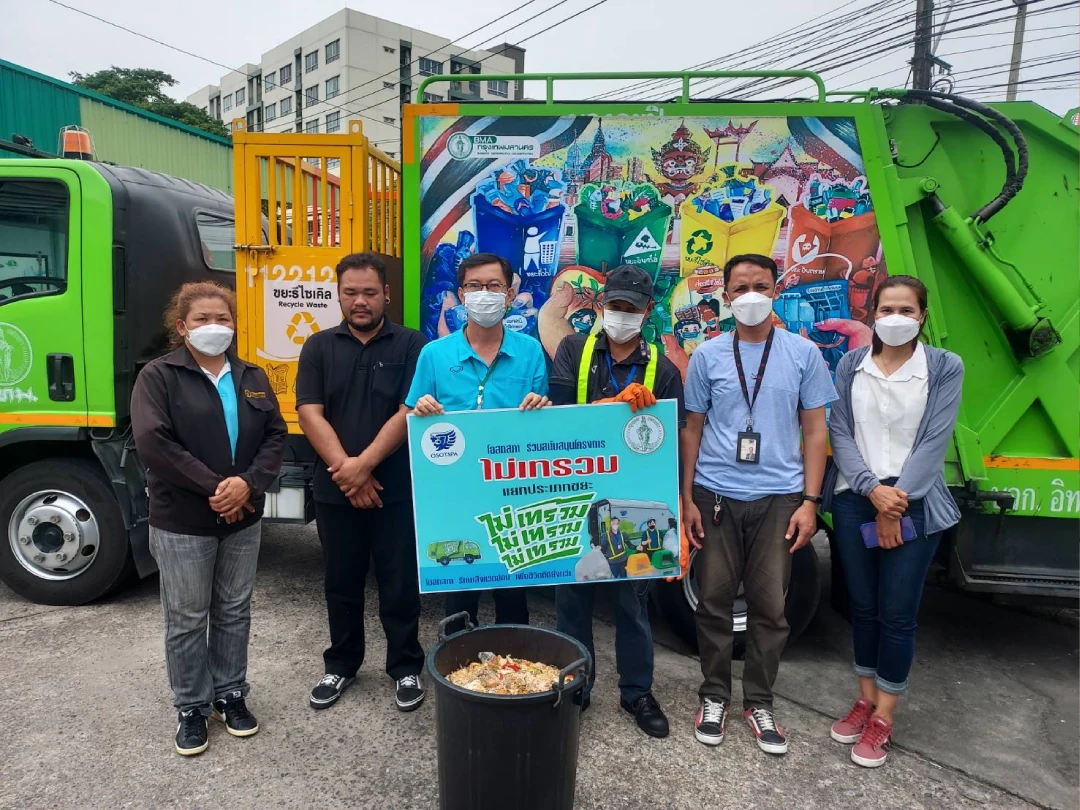
“Mai Tay Ruam” Project with Bang Kapi District Office, Bangkok
Osotspa collaborated with the Bang Kapi District Office to systematically manage food waste from office activities. Employees segregate food waste at source, after which cleaning staff collect and transfer it to a designated food waste storage point. District officers then transport the food waste to a composting area, where it undergoes composting, pile turning, and quality inspection within the specified timeframe before being packed and used to support community benefits. This project helps reduce the amount of food waste requiring final disposal and promotes the efficient use of resources.
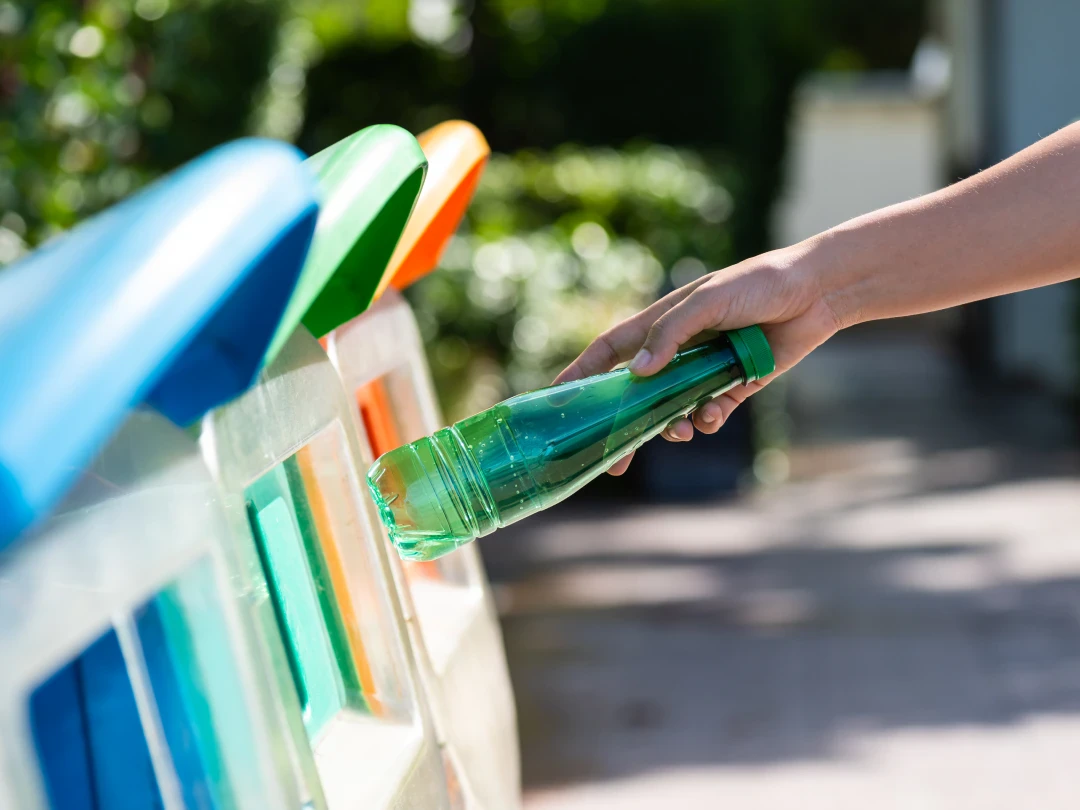
Employee Waste Management Awareness and Training
To strengthen the long-term sustainability of its operations, Osotspa places importance on developing employees’ knowledge, understanding, and capabilities in waste management through internal communication, training, and continuous awareness campaigns. The Company also conducts online surveys to assess employees’ knowledge, understanding, and practical application of waste management practices. The results are analyzed and used to improve the content and format of future activities to better align with work contexts. This serves as an important foundation for driving an organizational culture of efficient resource use, with employees serving as key agents of sustainability transformation at all levels of the organization.